
Chromatic Aberration Explained
Chromatic Aberration Explained: Causes & Correction Methods
Chromatic aberration remains one of the most persistent optical challenges in spectacle lens design, yet people rarely mention it by name. Many don’t understand the issue well enough to say something as specific as, “I see colored fringes”. Instead, they describe vague problems, like the glasses just don’t “feel” right.
For us, understanding chromatic aberration helps solve these problems. It’s one of the keys we use when making a material recommendation.
What is chromatic aberration?
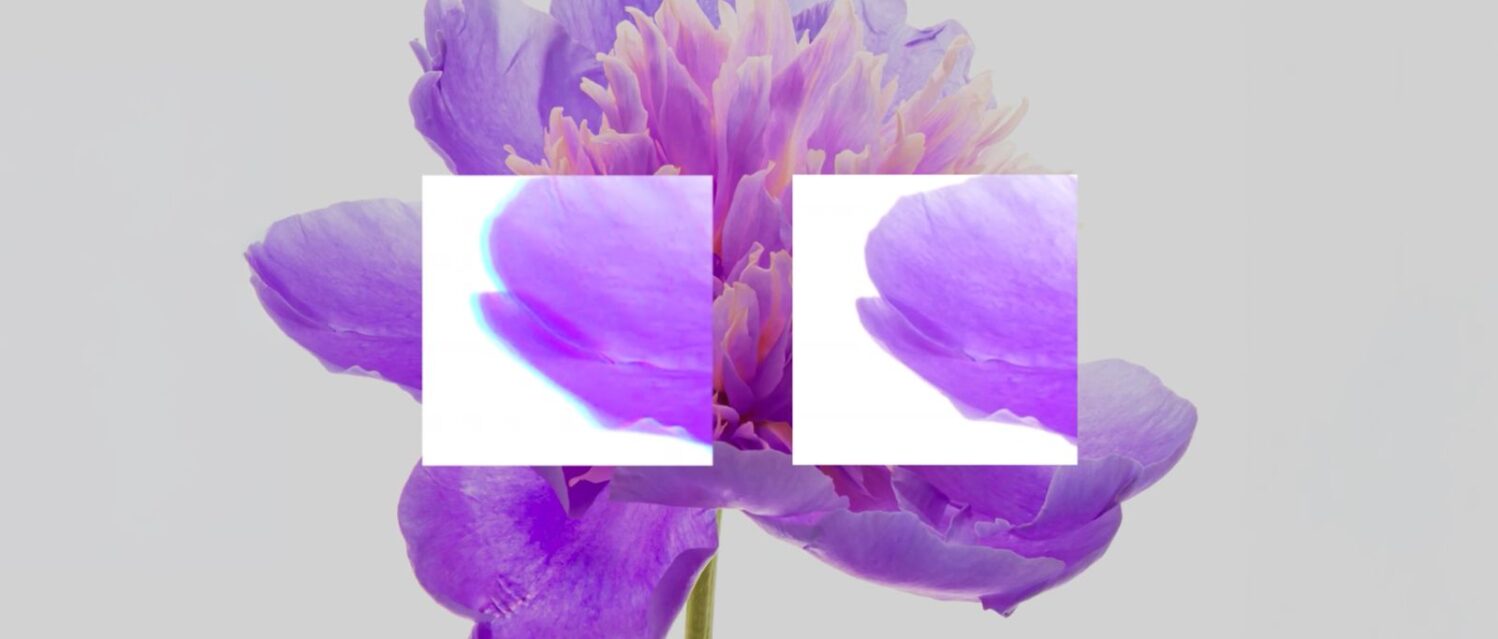
Chromatic aberration occurs when your lens does not focus all the colors of light, at the same point. Ophthalmic lens materials create power by bending light in varying amounts, and each wavelength of that light focuses at a slightly different point. This results in the wearer seeing a blurred image with unwanted color distortion.
The Geek Speak
There are two main forms of chromatic aberration:
1. Longitudinal chromatic aberration (LCA)
This form of chromatic aberration occurs along the optical axis when different wavelengths focus at different distances from the lens. Blue wavelengths focus slightly closer to the lens than red wavelengths, creating a subtle halo effect around high-contrast objects. (High-contrast objects are visual elements with a significant difference in luminance or color between the object and the background, making them easily distinguishable). Though the brain often corrects for small disruptions, in higher prescriptions, this longitudinal spread becomes more pronounced, reducing the contrast.
2. Transverse chromatic aberration (TCA)
Transverse chromatic aberration occurs when different wavelengths of light focus at different lateral positions on the retina. It happens when the eye looks away from the optical center, and is the most clinically significant form of chromatic error in ophthalmic lenses.
When a wearer looks away from the optical center of a lens, prism is induced. This prism increases with both lens power and distance from the optical center. Because each wavelength of light is refracted slightly differently, this prismatic effect is not the same for all colors.
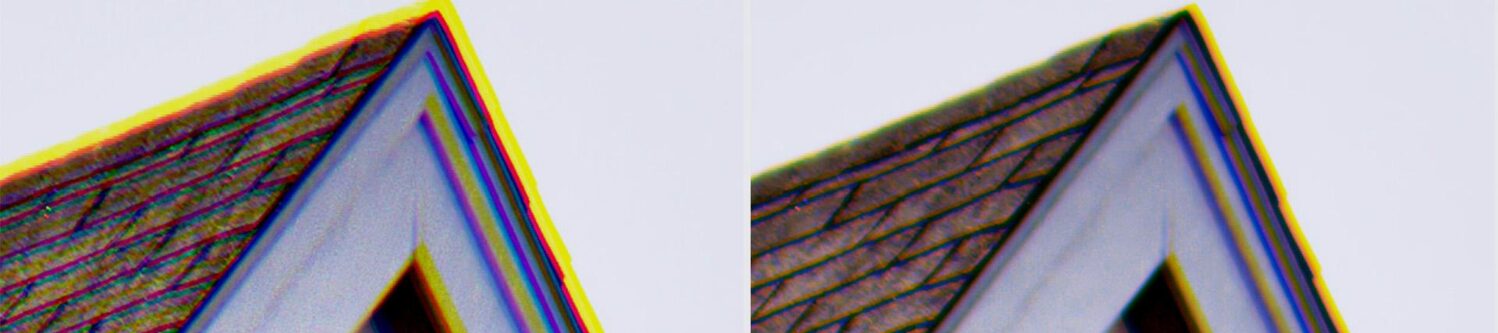
The result is a color-dependent displacement that gets worse toward the periphery of the lens. This lateral separation is seen by the wearer as color fringes along high-contrast edges.
Prism is the mechanism by which TCA becomes visible. Patients with higher prescriptions or lower-Abbe materials are typically more sensitive to these effects, particularly in peripheral vision.
Causes of chromatic aberration
Several factors determine whether aberrations become significant enough to bother the wearer.
1. Material index and Abbe value
Every lens material has an Abbe value, a numerical measure of optical clarity that quantifies how much a lens material disperses light into its component colors as it passes through.
- High Abbe (i.e., CR-39 at 58): less chromatic aberration, more visual comfort.
- Low Abbe (i.e., 1.74 high-index at ~32): greater chromatic aberration, more color separation.
Typically, higher-index materials used to reduce lens thickness also have a lower Abbe value.
2. Lens design and prescription
Your lens design and prescription play a significant part in whether chromatic aberration is present. Some designs and prescriptions are more prone to causing chromatic aberrations than others.
- Progressive addition lenses: Most PAL designs include a prism reference point in the corridor rather than a true optical center in the distance, without which the patient will experience prism, even when looking straight ahead.
- Single vision vertices: Proper centering and accurate measurements ensure patients access a true prism-free zone. However, patients with increased vertex distances encounter more prism the further from the optical center they look, making material selection more important.
- Prism effects: Higher prescriptions and decentered lenses induce prism, which separates colors. Thus, the stronger the prescription or the greater the decentration, the more noticeable this chromatic spread becomes.
3. Lens thickness and geometry
Thicker lenses, especially in minus powers, tends to make off-axis aberrations worse because this type of lens refracts light rays more steeply. This increases the separation of colors and makes chromatic fringes more noticeable in the periphery.
Aspheric and free-form designs are often used to counteract this by flattening the lens curves to control oblique aberrations and reduce peripheral distortion. However, while these design strategies improve clarity and comfort, the foundational level of chromatic aberration is still governed by the Abbe value of the lens material. Thinner lenses and lens geometry can refine performance, but the lens material still sets the optical “ceiling.”
4. Viewing distance
When a person wearing glasses views a near object, the amount of prismatic effect is small. For distant objects, the prismatic effect becomes greater, especially for patients with stronger prescriptions. As the viewing distance increases, the width of the color fringes also increases, causing more visible blurring and color separation. This phenomena helps explain why patients may pass all in-office tests yet struggle with real-world vision.
Methods for reducing chromatic aberration
Selecting different materials remains the primary method for minimizing chromatic aberrations.
When prescription power exceeds ±4.00D, consider materials with a higher Abbe value, such as 1.67, to relieve chromatic aberration while also ensuring a good balance with lens thickness. For prescriptions under ±3.00D, standard plastics or mid-index materials with higher Abbe values will provide good optical clarity, with less concern for thickness reduction.
At Goodrich optical we use precise position of wear measurements to maximizes the prism-free viewing area and minimize chromatic effects. We carefully considered lens designs which helps the eye to better tolerate remaining chromatic effects. For progressive wearers we utilize custom corridor designs to help reduce perceived fringes.
This combination of strategies helps maximize wearer comfort.
Our approach to improving visual aberrations
Utilizing industry-leading lens technologies, we improve visual acuity for wearers with natural, stable, and effortless designs. Prioritizing how people actually see, move, and interact with their environment, we create eyewear that minimize common visual disruptions.
By carefully managing how vision transitions from distance to near, and how the eye perceives clarity, we designs lenses that reduce visual strain and improve overall comfort. The result is a sleek, balanced visual experience, one where clarity feels consistent, transitions feel smoother, and improved visual acuity feels natural.
Instead of battling distortion, blur, or instability, you’ll benefit from vision that supports your needs throughout the day, whether working, driving, or shifting between tasks. Ultimately, the use of these innovative technologies delivers better control over how vision is delivered, transforming your lenses into a seamless extension of natural sight.

Contact us
Call us
Visit us anytime
Goodrich Optical, 2450 Delhi Commerce Dr. Holt, MI 48842
Send us an email
About us
Subscribe
Sign up for our newsletter to receive all the latest eye health news as well as offers and discounts from Goodrich Optical.

Copyright © 2026 all rights reserved.