
Daily Disposables vs. Sleeping in Your Contacts: A Guide to Not Losing Your Sight
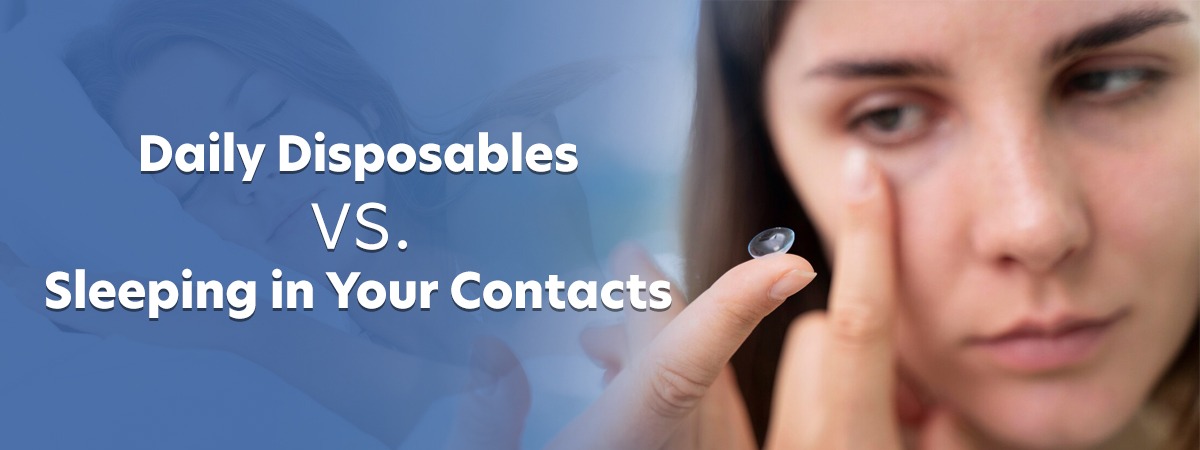
The contact lens market is drowning in choices, which is great for business and terrible for decision-making. Eventually, every wearer hits the same wall: Is the convenience of sleeping in my lenses worth the risk of turning my cornea into a bacterial petri dish? Or, to put it bluntly, are daily disposables actually safer, or is it just marketing fluff?
The short answer is: Yes, they are safer. The long answer involves a crash course in corneal physiology and why your eyes hate being suffocated.
Your Cornea Breathes Air, Not Blood
Here’s the thing most people miss: Your cornea is the only tissue in your body with no blood supply. It doesn’t get oxygen from the bloodstream; it breathes directly from the air, through your tears. When you slap a contact lens on it, you’re essentially putting a blanket over its nose.
Every lens reduces the amount of oxygen that reaches the cornea. The metric we use to measure this is Dk/t. Back in the 80s, researchers figured out that if you want to sleep in your contacts, without starving your cornea, you need a Dk/t of at least 87. Old-school hydrogel lenses? They just couldn’t cut it.
When your cornea is starved of oxygen, it panics. It starts growing blood vessels (A process called neovascularization) into a cornea that’s supposed to be crystal clear. It also becomes a sticky trap for bacteria. Suddenly, you’re not just wearing a lens; you’re hosting a microbial rave.
The Silicone Hydrogel “Fix” (And Why It’s Not Magic)
Along came silicone hydrogel in the late 90s. Suddenly, lenses like Air Optix Night & Day claimed they could be worn for 30 nights straight. Dk/t values jumped to over 175. Theoretically, this solved the oxygen problem.
But here’s the catch: Oxygen isn’t the only thing that suffers when you sleep in your lenses. When your eyes are closed, the tear film stagnates. You stop blinking, and metabolic waste builds up under the lenses. More oxygen helps, sure, but it doesn’t fix the fact that you’re sleeping with a foreign object plastered to your eye.
The Infection Reality Check
Let’s talk about Microbial Keratitis. It’s a fancy term for a corneal infection that can scar your eyes and ruin your vision, permanently. It’s not common, but when it strikes, it hits hard.
The data is consistent and not exactly comforting: The risk of infection from sleeping in your lenses rises 5 to 15 times greater than wearing them just during the day. That is not a minimal difference. It’s a massive leap in probability. Even the fanciest silicone hydrogel lenses won’t erase that risk.
Today, daily disposables are the gold standard. Why? Because you throw them away. No lens case to harbor bacteria, no solution contamination, and no protein buildup from previous wear.
A 2015 study in Optometry and Vision Science confirmed it: daily lens wearers have significantly fewer corneal issues. The logic is simple: A fresh lens is a clean lens. A reused lens is a gamble.
The “I’ll Just Top It Off” Problem
Here’s an ugly truth: Most people don’t follow the rules. They stretch a two-week lens into a month. They top off their solution instead of dumping it. They sleep in lenses that aren’t approved for it.
Lens safety studies assume perfect compliance. Real life? Not so much. A two-week lens worn for six weeks, in a dirty case, is a ticking time bomb. Daily disposables remove the compliance issue entirely. There’s no schedule, no cleaning, no storage. For the vast majority who are honest enough to admit we’re lazy, that’s not just a convenience, it’s a clinical necessity.
When Does Sleeping in Contacts Actually Make Sense?
There are exceptions. If you’re a surgeon, an ER nurse, or someone whose job makes removing lenses a logistical nightmare, extended wear might be a viable option. But, and this is a big but, it requires strict monitoring.
If you’re sleeping in your lenses, you need to see your optometrist more often. They need to check for those early warning signs: blood vessel growth, surface changes, and fit degradation. An extended wear fit, without regular follow-up, is a prescription for disaster.
The Fit Matters (Yes, Really)
Not every eye can handle every lenses. Corneal shape, tear quality, lid anatomy—all must be considered. At Goodrich Optical in Holt, we don’t just hand you a box and wish you luck. We start with a thorough assessment of your ocular surface.
If you have dry eye, meibomian gland dysfunction, or a history of corneal issues, extended wear is probably a bad idea, regardless of what you want. If your eyes are healthy and your tears are flowing, you might be okay—but only if the fit is perfect and you keep your appointments.
The recommendation comes after the exam, not before.
The Bottom Line
For most people, daily disposables are the safer long-term play. The infection risk is lower, and the “clean as you go” model eliminates the human error factor. Extended wear has its place, but it’s a narrow lane that requires discipline and professional oversight.
If you haven’t had a proper fitting in a while, or if you’re still guessing which lens is right for you, Make an appointment. We’ll look at your eyes, not just your prescription.
Frequently Asked Questions (The “Don’t Do This” Edition)
Q: Can I just sleep in my daily disposables once in a while if I forget?
No. They are designed for one day. Wearing them overnight is like wearing a raincoat in a sauna—it defeats the purpose and creates a mess.
Q: Are silicone hydrogel dailies better than standard hydrogel?
Yes. They let more oxygen through, which your cornea appreciates. Unless you have a specific reason to avoid them, they’re the way to go.
Q: How often should I get my eyes checked if I sleep in contacts?
More often than daily lens wearers. Six months is the absolute minimum. If you skip this, you’re asking for it.
Q: Is a contact lens exam the same as a regular eye exam?
Nope. A regular exam checks your vision for glasses. A contact fitting checks your eye health, measures the curve of your cornea, and ensures the lens doesn’t suffocate your corneas. It’s a separate, critical step.
5 Engaging Questions to Spark Comments
- “Ever tried to ‘just top off’ your solution and regretted it later? What was the fallout?”
- “What’s the weirdest thing you’ve ever done to make your contacts last longer? (We won’t judge… much.)”
- “Daily disposables vs. monthly lenses: Which camp are you in, and why? Let’s settle this debate.”
- “Have you ever slept in your contacts ‘by accident’? Did your eyes forgive you, or did you pay the price?”
- “What’s one contact lens myth you’ve heard that you wish would just die already?”