
Titanium Frames vs. Plastic Frames: Seeking value
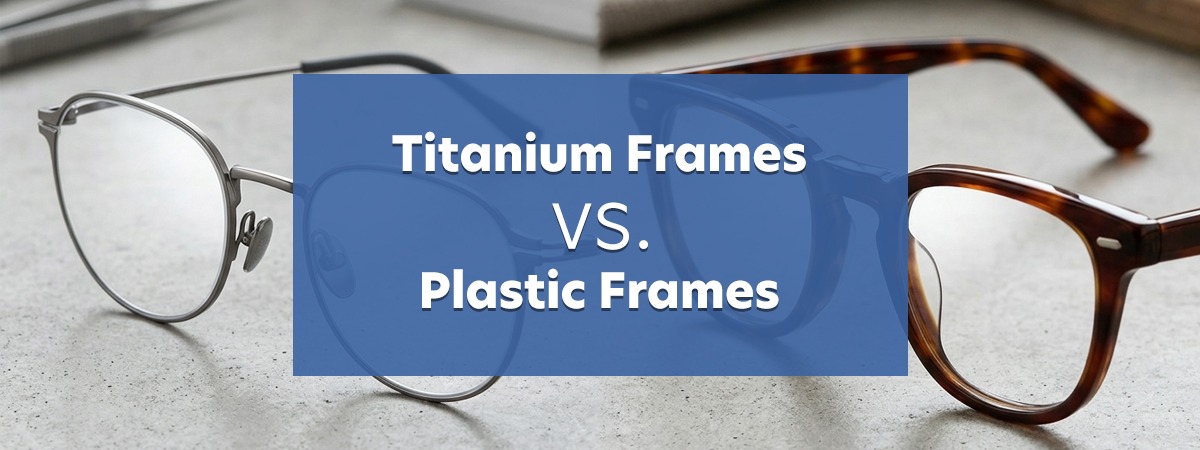
Why titanium beats plastic: Titanium resists corrosion, won’t snap from stress, and stays lighter over years of wear. Plastic oxidizes and cracks in 2- 4 years; titanium often lasts a decade or more with basic maintenance.
The Daily Grind at the Counter
Let’s be honest. This is the scene every Tuesday morning at Goodrich Optical. A patient slides their two-year-old plastic frames across the counter. Temples show cracks near the hinge. Nose bridge? Covered in a grimy, oxidized film. And the color. The color isn’t just faded; it’s shifted into something unrecognizable. They’ll still hold a lens. But they look tired, feel cheap, and sit wrong on the nose.
Replacing them isn’t a failure of care. It’s the material giving up the ghost. Plastic has a shelf life. Titanium on the other hand doesn’t play by those rules. Before you commit to a pair for the next few years, know what you’re actually buying.
How Titanium Got Into Your Glasses
Titanium wasn’t always an optician buzzword. In the early ’80s, Japanese manufacturers figured out how to machine it at scale. Before that, it was flying around in jets and living inside human hips. Why? High strength-to-weight ratio, zero corrosion, and biocompatibility.
By the mid-80s, it hit the premium rack. Today, we see three types: pure titanium (99%+), beta-titanium alloy, and generic titanium blends. Each behaves differently, but none of them degrade the way acetate does.
Weight That Matters After Lunch
Titanium density sits around 4.5 g/cm³. Steel? Nearly double that at 7.8. Translation: Titanium is significantly lighter than metal alternatives and most heavy acetate frames of the same size.
Here’s where it counts: not at checkout, but at 3 PM. Wearing a frame that’s even a few grams heavier creates cumulative pressures. Over months, patients develop red spots from the nose pads, sore ears, or frames that slide down their face constantly. Beta-titanium can cut that load. You’ll notice the difference far more after wearing them for eight-straight hours, than when you try them on.
Plastic Cracks. Titanium Bounces Back.
Plastic fails predictably. Hinge barrels, temple junctions—any spots that flex take the hit first. Acetate handles stress when new, then accumulates micro-fractures. Once they breach the surface, the frame snaps or cracks further under light handling.
Beta-titanium? Engineers call it “high fatigue resistance.” It flexes thousands of times without permanent deformation. Bend it by accident? Adjust it back. Won’t fracture.
Plastic can’t do that. Period.
A well-maintained titanium frame holds its geometry for a decade or more. Most plastics start showing degradation within two to four years. Quality helps, but it doesn’t change the physics.
Sweat, Sun, and Skin Reactions
Acetate oxidizes. The surface gets dull and slightly tacky. You can’t clean that off. UV exposure breaks down the plasticizers keeping it flexible. Leave frames on a hot dashboard? They’ll rot faster than anything stored in a case.
Titanium forms a passive oxide layer. It’s inert. Sweat, makeup, skin oils, humidity—it doesn’t corrode. For active patients, outdoor workers, or anyone in a humid climate, this isn’t theory. It’s necessity.
Plus, it’s nickel-free. Contact dermatitis from metal or plastic frames? Titanium usually fixes that completely.
The Price Tag vs. The Reality
Titanium costs more. Don’t pretend otherwise. Machining hard metal is harder, finishing is trickier, and assembly requires tighter tolerances than molding acetate. But here’s some math: A titanium frame, lasting three to four times longer, is better value plain and simple. Plus, it holds its adjustment longer. The lenses sit where they belong. Plastic gradually warps; leaving your prescription feeling off before you realize why.
Not every patient needs titanium’s advantages. Weaker prescriptions, fashion-driven frame changes? Plastics are fine. Complex prescription, active lifestyles, skin sensitivity issues? Titanium is the only defensible recommendation.
Consider the advantages titanium’s can offer. At Goodrich Optical, we don’t just sell frames or eyeglasses in Lansing; we analyze your wants and needs, prescription complexity, and wear habits. If titanium isn’t right for you, we’ll tell you. Get educated recommendations. No upsell, no BS.