
Could a Vision Issue Masquerade as a Behavioral Problem?
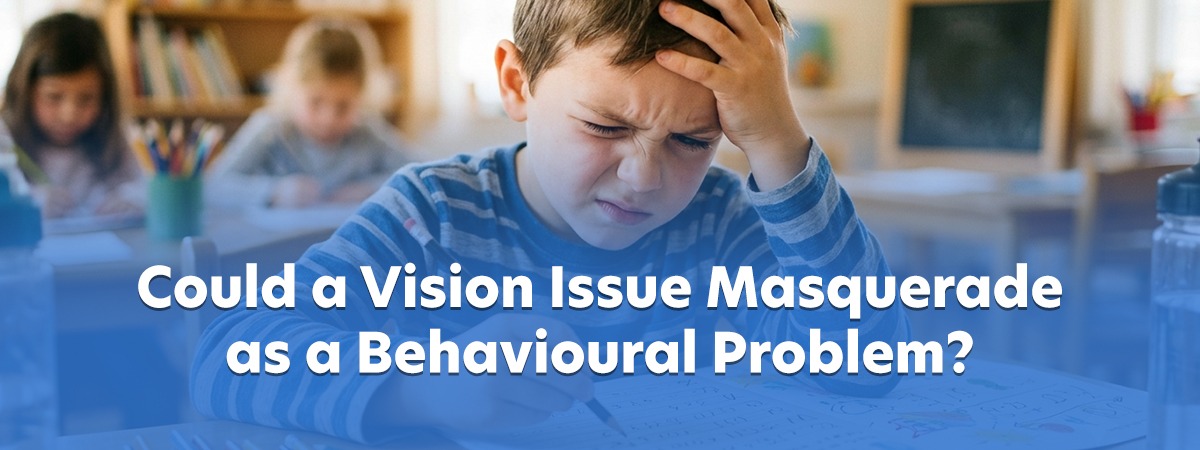
Here’s the thing—your kid’s teacher says they seem “distracted.” Your spouse thinks they’re just not trying. But what if the real culprit is hiding in plain sight? Literally.
Kids with undiagnosed vision problems don’t walk around saying, “Hey, my eyes feel weird when I read.” Nope. They behave differently. They fidget. They quit mid-homework. They claim the words are swimming on the page. Sound familiar?
Classic Red Flags (“Behaviors” to Watch For)
Watch for these behaviors during reading or homework sessions:
- Can’t sit still during reading assignments
- Words blur after just a few minutes
- Frequent eye rubbing, way more than normal
- Headaches that mysteriously appear after school
- Losing their place while reading
- Avoiding books altogether (or becoming dramatically frustrated)
- Squinting at things that should be readable
- Closing one eye while doing up-close work
Why Your Kid Doesn’t Report Vision Problems
It’s Simple: they believe everyone sees the way they do.
Adults often notice changes in their eyesight because they can compare their current vision to what they had previously experienced. A child may not have that reference.
Many kids have blurry or uncomfortable vision for as long as they can remember- They have nothing to compare to. That headache during math class isn’t a headache, it’s just Tuesday. Reading slowly isn’t unusual, everyone takes forever to finish their worksheet, right?
And here’s the sad part- The harder they try to focus, the worse it gets. And now people start talking about behavioral problems.
School Screening Myth
Your child passed the school screening or vision test at the pediatrician’s office? Great. Doesn’t mean your kid’s eyes are fine—they might just have the wrong kind of problem for what was tested.
Can your child still have significant vision issues affecting their learning abilities. According to research- More often than not, YES! About 75% of childhood vision problems slip past school and pediatrician screenings.*
| Source | Finding | |
| American Optometric Association (via Patients Safety Today) | Screenings miss up to 75% of children with vision problems | |
| Utah Health Feed (2024) | Confirms 75% miss rate for significant problems like moderate hyperopia or focusing issues | |
That’s three of every four kids who walk away thinking they’re fine, when they’re not.
Read Also – Children’s Eye Health Month Ends When School Starts — Don’t Miss It
Here’s What That Means Practically
- School screenings: Usually just distance acuity (can you read line 3 at 20 feet?). They don’t test near vision, binocular function, focusing stamina, or eye teaming—the exact stuff that sabotages homework and classroom focus.
- Pediatrician screenings: Even spottier coverage. Less than 22% of kids receive any vision screening at a well-child visit, and fewer than 15% of preschoolers have had a comprehensive eye exam.
These skills matter far more for a kid sitting in front of a whiteboard for six hours. That’s why a comprehensive exam by an eye care professional is the only way to know for sure.
What You Can Track at Home
Keep a simple log for two weeks:
- How long reading stays comfortable before complaints start
- Whether symptoms spike after screen time
- Activities they consistently dodge
- Frequency of eye-rubbing or one-eye-closing behavior
- Distance they hold materials (unnaturally close = warning sign)
When to Actually Make an Appointment
Don’t wait for perfection. Consider a comprehensive eye exam when:
- Teacher reports new academic struggles out of nowhere
- Headaches appear regularly (especially after lunch ones)
- Reading becomes noticeably harder than before
- Books/homework get actively avoided
- Squinting occurs more than twice a week
- Eye-rubbing that looks excessive
- Losing their place is a daily occurrence
Bottom Line
Vision isn’t always the answer to attention or behavior questions—but ignoring it guarantees you’ll miss part of the puzzle. Some kids genuinely benefit from glasses. Others need behavioral strategies. Some need both. Either way, ruling out vision problems saves everyone frustration.
A proper comprehensive exam checks more than 20/20 acuity. At Goodrich Optical, we assess how eyes focus, coordinate, track, and respond to sustained demands. That’s the difference between passing a hallway screening and getting answers.
If you’re searching for an Eye Exam in Holt or Kids Eye Exams, we’re here to dig deeper than the basics.
Your eyes deserve expert care. Book your exam at Goodrich Optical today.
Vision Problems & Kids: Real Answers From 60 Years Behind the Lenses
Q1). Can vision problems make my child appear distracted?
- Absolutely. If reading the board or textbooks is a fight, kids tune out. They’ll stare into space, fidget, or just plain quit the task.
- Doesn’t mean it’s always vision—but when a kid suddenly stops paying attention around age 8-9? My money’s on the eyes first, then we dig deeper.
Q2). Can my child have a vision problem even if they passed a school screening?
- All the time. School screenings are glorified finger-waving tests—usually just checking to see if you squint at line 3 from twenty feet away.
- They miss focusing stamina, eye teaming issues, depth perception problems, and near-work strain. That’s the real stuff that kills concentration during and after class.
Q3). Does needing glasses always cause attention problems?
- No. And here’s where parents can get things twisted up: blaming the eyes for everything- when sometimes it’s sleep, diet, screen overload, or straight-up ADHD.
- Glasses fix clarity issues. They don’t fix wiring. But clarity helps—it clears up one piece of the puzzle.
Q4). How often should children have their eyes examined?
- Depends. First exam- between 3 and 6 months, again around age 3, and another before kindergarten, then every 1-2 years after—Sooner if a glasses prescription is found, or your eye care professional recommends it.
- Risk factors matter. A family history of strabismus, amblyopia, or strong prescriptions? You need more frequent checks.
- When in doubt, call us. Better to find nothing than to find out too late.